Discover the Joy of Birdwatching
The Southwestern Idaho Birders Association (SIBA) was founded in 1997 by a group of individuals who shared a common interest in birdwatching. Since then, we have grown into a thriving community that offers a variety of events and resources to our members.
The Mission of SIBA is "To promote birdwatching and environmental conservation among the members and general public."
Join Our Club


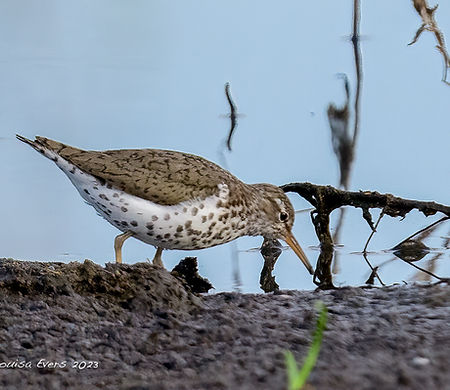
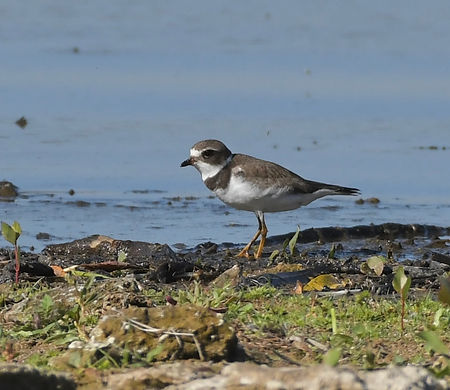
Spotted Sandpiper by Louisa Evers
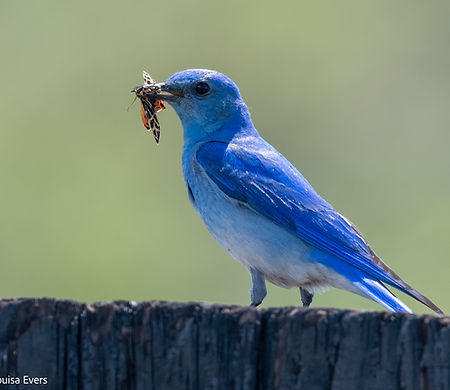
Blue Grosbeak by Linda Wentz
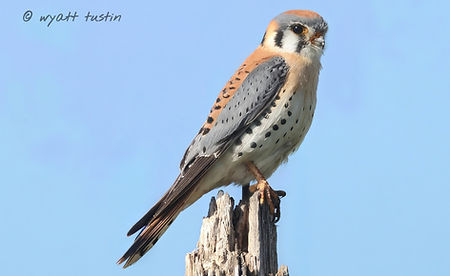
Lazuli Bunting by Wyatt Tustin


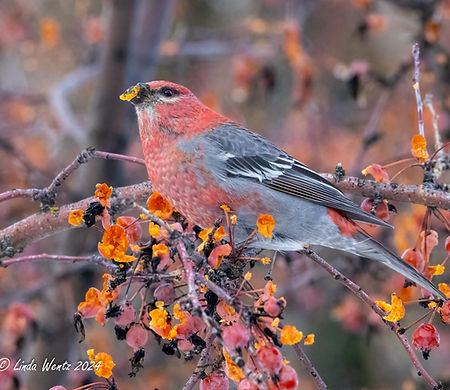
Barred Owlet by Linda Wentz
Bird of the Month
by Louisa Evers
Bird of the Month: Swainson’s Hawk September is the month we start saying good-bye to Swainson’s Hawks (Buteo swainsona). As the month progresses, we’ll see fewer of these birds but there’s also the chance to see a gathering of these hawks as they fatten up for the journey south. The really interesting thing about these gatherings is that the birds are eating grasshoppers! Grasshoppers have lots of fat and protein needed to help them reach South America. With its habit of perching on power poles, it could be mistaken for a Red-tailed Hawk. Ther are some key differences that allow you to tell the two apart. From the back, the Swainson’s Hawk is a solid chocolate brown while the Red-tailed Hawk often has a somewhat mottled appearance from its scapular V. From the front, the Swainson’s Hawk has a brown breast, noticeable yellow cere (the area around the nostrils), and banded tail. A Red-tailed Hawk has a belly band, the cere is not as obvious, and that red tail. These distinctions refer to adult light morphs of both species, which is the most common morph we see for both. These differences are still visible but muted in intermediate morphs but harder to see in dark morphs. In flight, Swainson’s Hawks have longer, more pointed wings than Red-tails and they often hold them in a slight V while soaring. We can also see the lack of a belly band, the dark breast, and the banded tail. Additionally, the flight feathers of the Swainson’s Hawk are dark and the leading edge of the wing is light. The Red-tail has dark tips on the flight feathers and the leading edge of the wing closest to the body is dark (the patagials). Close views of the Swainson’s Hawk will show that the cere stands out due to a band of white feathers at the base of the bill and the presence of a white chin patch.

Swainson's Hawks

Meetings
2026 Meeting Schedule
Meetings are held on the second Thursday of the following months
at 7:00 PM Mountain Time
July 9th – Hybrid meeting – in person and Zoom
October 8th – Hybrid meeting – in person and Zoom
November 12th – Annual Member meeting – Hybrid – in person and Zoom.
In-person meetings are held at the Deer Flat National Wildlife Refuge Visitor Center
13751 Upper Embankment Rd, Nampa, ID
October 8th – Hybrid meeting – in person and Zoom
Speaker will be announced in September
Join Zoom Meeting at the scheduled time:
https://us02web.zoom.us/j/81011857044?pwd=vgLpycJkjrrZZnbQWNdQZ6RRljas3y.1
Meeting ID: 810 1185 7044
Passcode: 031179
Field Trips
Upcoming Field Trips
Lake Walcott/Minidoka NWR
Date: Saturday, September 12, 2026
Time: 6:30 a.m.
Location: Meet at the Liquor Store at 6584 S Federal Way, Boise, ID
Trip Leader: James Jarrett
Registration Required: email James Jarrett at SIBAFieldTrip@gmail.com
We will meet near the LiquorStore/Sinclair Gas Station and form carpools
to drive to Lake Walcott. We hope to see
migrating waterfowl, gulls, terns, and loons.
This will be an all-day trip so bring water, lunch,
binoculars, and layers for fall weather.
Field Trip Leader: James Jarrett
Registration Required for all field trips:
email James Jarrett at SIBAFieldTrip@gmail.com
SIBA August Field Trip for Blacks Creek Bird Reserve
Saturday 15 Aug 2026
We started the day with clouds and wind, which was an improvement on the smoke from the past few weeks. We started by hiking down into the trees looking for songbirds. On the way down the hill in the sagebrush we saw a Sage Thrasher. Once we made the trees, we saw an Eastern Kingbird, Loggerhead Shrike, and a Barn Owl. We then moved over to the shoreline to look at waterfowl and wading birds. Along the shoreline we saw Red-necked Phalaropes, Franklins Gulls, a Semipalmated Sandpiper, and a Horned Grebe. We spent a good bit of time looking at a Baird’s Sandpiper that had a dark belly as it didn’t look right. Then, on our way back to the parking lot we found a tree full of sparrows including Brewer’s and Lark Sparrows. We then finished up with a Wilson’s Warbler.
Over the course of the morning the ten participants that braved the chance of rain,
saw 55 species and had a great time.

Member Photo Gallery





Contact Us
If you have any questions about the Southwestern Idaho Birders Association,
please don't hesitate to contact us. You can reach us by email by entering your name, email and a message then click submit. Alternately, message us through our Facebook page. To join or renew membership, click on Join Now button to download the form.